Workplace Mental Health and Wellness in Indian Startups: Building Resilient Teams Without Burning Them Out
The Silent Crisis in Indian Startup Culture
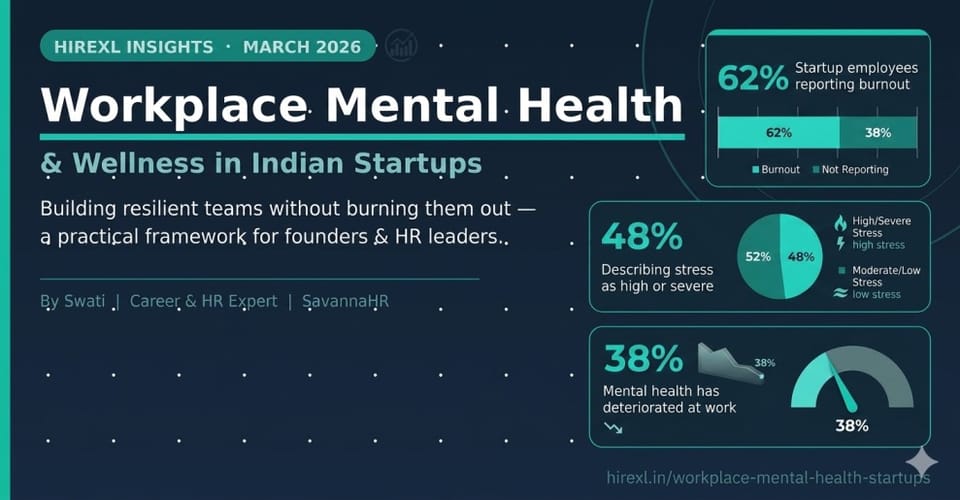
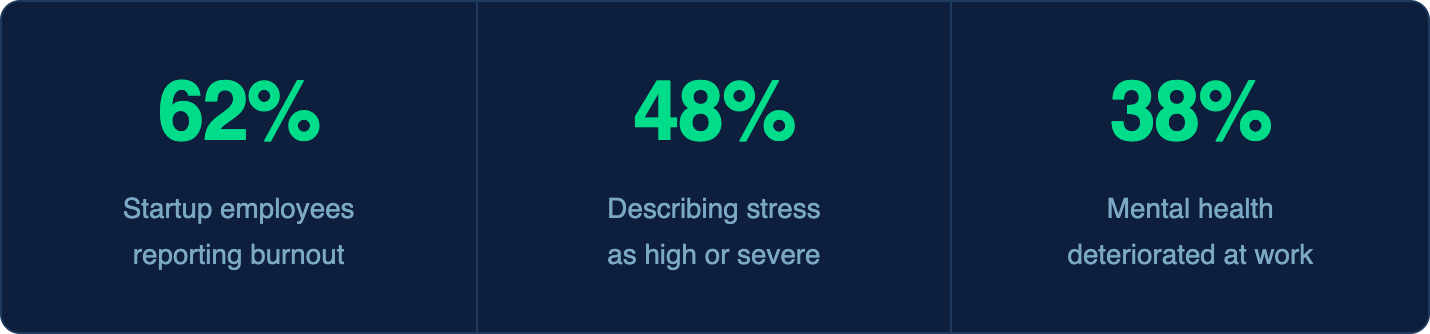
ndia's startup ecosystem has produced remarkable innovation, created millions of jobs, and generated billions in economic value over the past decade. But beneath the surface of this success story lies a growing crisis that threatens the sustainability of the entire model: the mental health of the people who build these companies. According to a 2025 survey by the Indian Psychiatric Society conducted in partnership with NASSCOM, 62 percent of startup employees in India report experiencing symptoms of burnout, 48 percent describe their stress levels as high or severe, and 38 percent say their mental health has deteriorated since joining the startup ecosystem. These are not minor discomforts; they represent a systemic problem that is eroding productivity, driving attrition, and creating long-term health consequences for an entire generation of professionals.
The startup world has long celebrated a culture of hustle, where working 12-hour days is worn as a badge of honor, where 'we work hard and play hard' is a recruiting slogan rather than a warning sign, and where the implicit expectation is that personal boundaries should be subordinated to the mission of building something extraordinary. For a time, this culture seemed to work, or at least its costs were hidden. The pandemic, the subsequent wave of layoffs, and the growing awareness of mental health among younger professionals have collectively exposed what was always true: unsustainable work practices produce unsustainable results, and the human cost of burnout is far higher than any productivity gains from overwork.
This article is a practical guide for startup founders, HR leaders, and managers who want to build workplaces that are both high-performing and psychologically healthy. The two goals are not in conflict; in fact, the research overwhelmingly shows that they are mutually reinforcing. Companies that invest in employee mental health see lower attrition, higher productivity, better decision-making, and stronger innovation outcomes. The challenge is not whether to prioritize mental health but how to do it effectively in the unique context of Indian startup culture, where resources are constrained, pace is intense, and the pressure to deliver results is relentless.
Understanding Burnout: More Than Just Being Tired
Burnout is a clinical condition recognized by the World Health Organization, defined as a syndrome resulting from chronic workplace stress that has not been successfully managed. It manifests in three dimensions: emotional exhaustion, where the individual feels drained and unable to cope; depersonalization, where they develop a cynical or detached attitude toward their work and colleagues; and reduced personal accomplishment, where they feel ineffective and question the value of their contributions. Burnout is not the same as being tired after a hard week; it is a persistent state that erodes a person's capacity to function effectively over weeks and months.
In the Indian startup context, burnout is particularly insidious because the cultural norms around work ethic and sacrifice make it difficult to recognize and even harder to acknowledge. A developer who is working until midnight every day is more likely to be praised for their dedication than asked whether they are okay. A product manager who is visibly exhausted is more likely to be told to 'push through this sprint' than encouraged to take time off. And the competitive dynamics of the startup ecosystem mean that admitting to burnout can feel like admitting to weakness, which creates a culture of silence around a problem that affects the majority of the workforce.
The organizational costs of burnout are staggering and well-documented. A Gallup study found that burned-out employees are 63 percent more likely to take a sick day, 2.6 times more likely to be actively seeking a different job, and 13 percent less confident in their performance. Deloitte's research estimates that workplace mental health issues cost Indian employers approximately 1.5 to 2 percent of their total payroll through absenteeism, presenteeism, and attrition. For a startup with a 5 crore annual payroll, that translates to 7.5 to 10 lakh rupees in avoidable costs, money that could fund additional hires, better tools, or product development.
The Root Causes: Why Startups Are Particularly Vulnerable
| Structural Overwork
Many Indian startups operate with deliberately lean teams on the assumption that asking fewer people to do more work is more efficient than hiring additional headcount. In the short term, this can be true: small, motivated teams can move faster than larger, more bureaucratic ones. But there is a critical threshold beyond which lean becomes unsustainable, and most startups cross it without recognizing the transition. When a team of five is doing the work of eight, the immediate impact is longer hours and faster delivery. The delayed impact, which arrives six to twelve months later, is burnout, quality deterioration, and the departure of the most talented team members who have the most options elsewhere.
The solution is not to abandon lean operations but to be rigorous about capacity planning. If your team is consistently working more than 50 hours per week to meet deadlines, you do not have a productivity problem; you have a staffing problem. The additional cost of hiring to sustainable capacity is almost always less than the combined cost of burnout-driven attrition, sick leave, reduced output quality, and the recruitment costs of replacing departed employees. Progressive startups like Zerodha, Razorpay, and Freshworks have demonstrated that it is possible to build high-growth companies while maintaining reasonable work expectations, and their retention rates reflect the competitive advantage this creates.
| Always-On Culture and Boundary Erosion
The proliferation of messaging tools like Slack, WhatsApp, and Microsoft Teams has created an expectation of constant availability that blurs the boundary between work and personal life. In many Indian startups, it is common for team members to receive and respond to messages late at night, on weekends, and during holidays. The lack of formal policies around communication norms means that the most available people set the implicit standard, and anyone who wants to disconnect feels pressure to conform to the always-on norm.
Research by Microsoft's Human Factors Lab found that the simple act of receiving work notifications outside of work hours triggers a stress response even if the individual chooses not to respond immediately. The knowledge that work can intrude at any moment prevents the psychological recovery that is essential for sustained high performance. This is not an abstract concern; it directly impacts the quality of sleep, the depth of rest, and the capacity for creative thinking that drives innovation and problem-solving.
| Lack of Psychological Safety
Psychological safety, the belief that you can speak up, make mistakes, and be vulnerable without fear of punishment or humiliation, is the foundation of healthy team dynamics. In many Indian startups, the high- pressure environment and hierarchical cultural norms combine to create workplaces where psychological safety is low. Employees are afraid to admit that they are struggling, to push back on unrealistic deadlines, or to raise concerns about toxic behaviors because they fear being seen as uncommitted, weak, or not a culture fit. This silence perpetuates the conditions that cause burnout and prevents leaders from understanding the true state of their team's wellbeing.
Building a Mental Health Strategy: A Practical Framework
| Leadership Commitment and Modeling
Every effective mental health strategy begins with leadership. If the founders and senior leaders of a startup are working 80-hour weeks, sending emails at midnight, and never taking time off, no wellness program in the world will convince employees that the company genuinely cares about their wellbeing. Leaders must model the behaviors they want to see: taking vacations, maintaining boundaries around work hours, being open about their own struggles with stress and balance, and demonstrating that high performance is not synonymous with constant availability. This modeling is not optional; it is the prerequisite without which all other interventions will be perceived as performative.
Beyond personal modeling, leaders must make mental health a strategic priority with dedicated budget, clear goals, and regular review. This means appointing a senior owner for employee wellbeing, allocating resources for programs and infrastructure, including mental health metrics in leadership dashboards, and creating accountability for progress. The startups that make the most meaningful improvements are those where the CEO personally champions the initiative, not as a PR exercise but as a genuine business priority rooted in the understanding that the company's most valuable asset is the sustained performance of its people.
| Policy and Infrastructure
Concrete policies create the structural conditions for mental health. These should include a clear work- hours policy that defines expectations around availability and explicitly protects personal time. Many successful companies implement 'no meeting' days or blocks to preserve focus time, and some have established communication blackout periods during evenings and weekends where only genuine emergencies warrant contact. Leave policies should include generous mental health days separate from sick leave, with no requirement to provide medical documentation for short absences. The stigma around taking mental health leave is still significant in India, and reducing administrative barriers is a meaningful step toward normalization.
Provide access to professional mental health support through an Employee Assistance Program that offers confidential counseling sessions. Several Indian platforms, including Amaha, YourDOST, and InnerHour, provide corporate mental health programs tailored to the Indian context and priced accessibly for startups. These platforms typically offer individual therapy sessions, group workshops on stress management and resilience, and crisis intervention support. The investment is modest, typically 500 to 1500 rupees per employee per month, and the utilization data from these platforms consistently shows that 15 to 25 percent of employees access services when they are available, suggesting a significant level of unmet need in most organizations.
| Manager Training and Capability
The direct manager is the most influential person in an employee's work experience, and they are also the most likely person to notice early signs of burnout or distress. Yet most managers in Indian startups have received zero training in recognizing mental health concerns, having supportive conversations, or creating psychologically safe team environments. Invest in training managers to recognize the warning signs of burnout, including changes in work patterns, withdrawal from social interactions, increased cynicism, and declining quality of output.
Train managers to conduct effective one-on-one check-ins that go beyond project status updates to include genuine inquiry about workload sustainability, stress levels, and overall wellbeing. Provide them with scripts and frameworks for having supportive conversations when they notice signs of distress, and ensure they know how to connect team members with professional resources when appropriate. The goal is not to turn managers into therapists but to equip them with the awareness and basic skills to create supportive team environments and to escalate concerns appropriately when needed.
| Workload Management and Sustainable Pace
Many mental health issues in startups are not caused by the nature of the work but by the volume and pace of it. Implementing sustainable workload management practices, such as sprint capacity planning that accounts for realistic availability rather than theoretical maximum output, regular workload reviews that identify individuals or teams at risk of overload, and explicit prioritization that says no to low-value work rather than adding it to an already full plate, can prevent burnout before it starts. The concept of sustainable pace from agile methodology is directly applicable: a team that delivers consistently at 80 percent capacity week after week will outperform a team that sprints at 120 percent and then collapses into a recovery period of reduced output and increased sick leave.
Build in structured recovery time after intense periods. Product launches, funding rounds, and other high- pressure events are inevitable in startup life, and expecting sustained intensity during these periods is reasonable. What is not reasonable is treating every week as a crisis. After a major push, mandate reduced-intensity periods where the team can recover, catch up on deferred personal commitments, and recharge. Companies that institutionalize this rhythm report more consistent delivery over time compared to those that maintain constant high pressure.
Addressing India-Specific Challenges
Mental health support in the Indian context must account for cultural factors that shape how people experience and express psychological distress. The stigma around mental health remains significant, particularly for men and in traditional communities, which means that programs must be designed with confidentiality and accessibility as top priorities. Offering multiple channels for support, including text- based counseling for those who are uncomfortable with face-to-face sessions, and normalizing the use of these services through leadership communication and peer advocacy, can help overcome cultural barriers to seeking help.
The joint family system and social obligations that are characteristic of Indian culture add unique stressors that Western mental health frameworks may not adequately address. Employees may be managing expectations from extended family about their career choices, navigating financial responsibilities that extend well beyond their immediate household, or dealing with the cultural pressure to be constantly productive and successful. A culturally competent mental health program recognizes these specific stressors and provides support that acknowledges the social and cultural context in which Indian professionals live and work.
Gender-specific challenges also require attention. Women in Indian startups face the compounded stress of workplace demands, societal expectations around family and caregiving, and the additional cognitive load of navigating gender dynamics in male-dominated environments. Programs that specifically address the challenges faced by women, including support for working mothers, awareness of menstrual health and its impact on work, and safe channels for reporting gender-based harassment, demonstrate a commitment to inclusion that goes beyond generic wellness offerings.
Measuring Impact and ROI
Like any business investment, mental health programs should be measured for their impact and return. The most relevant metrics include employee engagement scores, absenteeism rates, voluntary attrition rates, utilization of mental health services, and responses to pulse surveys about stress and wellbeing. Track these metrics before implementing programs and monitor them over time to assess whether interventions are having the desired effect. Most organizations that implement comprehensive mental health programs see measurable improvements within six to twelve months, with the most significant impact on voluntary attrition and sick leave utilization.
The financial return on mental health investment is well-documented. The World Health Organization estimates that for every dollar invested in mental health treatment, there is a four-dollar return in improved health and productivity. In the Indian startup context, where the cost of replacing a mid-level employee is three to five times their annual salary, preventing even a small number of burnout-driven departures can generate returns that far exceed the cost of a comprehensive wellness program. Frame mental health investment not as a cost center but as a retention and productivity strategy with measurable financial returns.
The Bottom Line
The Indian startup ecosystem's greatest strength is its people: their energy, their creativity, their willingness to take risks and build something new. Protecting and sustaining that human capital is not a soft priority; it is the most important strategic investment a startup can make. The companies that will thrive over the next decade are not those that extract the maximum effort from their teams in the short term but those that build sustainable high-performance cultures where talented people can do their best work for years, not just months.
Mental health is not a perk to be offered when the company can afford it. It is a foundational element of organizational health that directly impacts every metric that matters: productivity, quality, innovation, retention, and ultimately, the company's ability to achieve its mission. Start with one step, whether that is a leadership conversation about work norms, the introduction of an EAP, or a policy change around after- hours communication, and build from there. The journey toward a psychologically healthy workplace is incremental, but every step creates value for both the business and the people who make it possible.
Sources & References
- Indian Psychiatric Society & NASSCOM - Startup Mental Health Survey 2025
- World Health Organization - Mental Health at Work Guidelines
- Gallup - State of the Global Workplace Report 2025
- Deloitte India - Mental Health & Employers Report
- Microsoft Human Factors Lab - Always-On Work Research
- Amaha/YourDOST - India Corporate Mental Health Utilization Data
- McKinsey Health Institute - Employee Mental Health & Wellbeing