
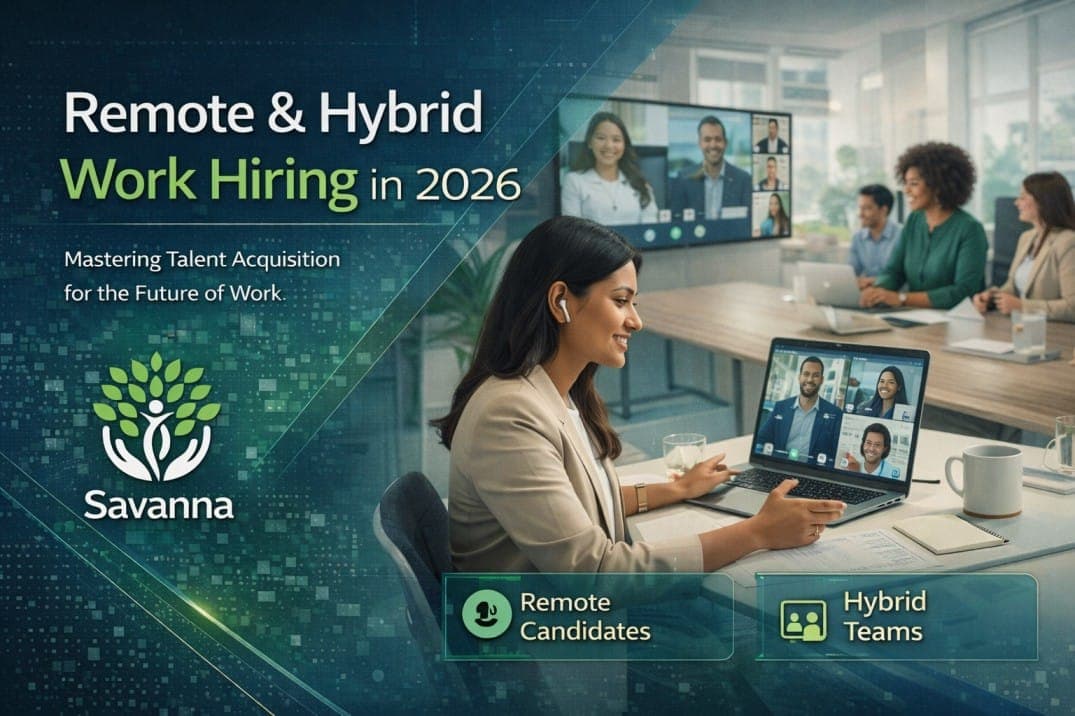
The Great Work Location Renegotiation
In 2023, the headlines screamed about the death of remote work. Major global companies issued return- to-office mandates, Indian IT giants like TCS, Infosys, and Wipro called employees back to campus, and a chorus of CEOs declared that in-person collaboration was essential for innovation, culture, and productivity. The era of remote work, it seemed, had been a pandemic-era anomaly that was finally being corrected. Two years later, the reality looks very different from those predictions.
By early 2026, the Indian tech industry has settled into a complex, nuanced equilibrium that defies simple categorization. According to data from Nasscom, approximately 35 percent of Indian tech workers are now in fully remote arrangements, 45 percent work in hybrid models with two to three days in office, and only 20 percent are back to full-time in-office work. More importantly, the distribution varies dramatically by company type, role, and geography. Startups are overwhelmingly hybrid or remote-first, with 68 percent offering flexible work arrangements as a standard policy. GCCs and multinational companies are predominantly hybrid, with structured in-office days. And traditional Indian IT services companies are the most likely to require full-time office presence, though even they have had to make significant concessions to retain talent.
For companies and candidates alike, understanding this evolving landscape is essential. Work location policy has become one of the top three factors influencing job decisions, alongside compensation and growth opportunities. Companies that get their remote and hybrid strategies right will have a decisive advantage in the talent market. Those that don't will find themselves losing top performers to competitors who offer the flexibility that has become a baseline expectation for India's tech workforce.
The Case for Flexibility: What the Data Actually Shows
The debate about remote work productivity has generated more heat than light, with advocates on both sides citing studies that support their preferred conclusion. But a comprehensive picture is beginning to emerge from large-scale, methodologically rigorous research. A 2025 study by Stanford economist Nicholas Bloom, analyzing data from over 30,000 workers across 14 countries including India, found that fully remote workers were approximately 10 to 15 percent less productive than their in-office counterparts on narrowly defined individual tasks. However, and this is the crucial nuance, hybrid workers working from home two to three days per week showed no productivity difference compared to fully in-office workers, and they reported significantly higher job satisfaction and 35 percent lower attrition rates.
For Indian companies, the attrition data is particularly significant. In a market where replacing a mid-level tech professional costs three to five times their annual salary, a 35 percent reduction in attrition translates into massive cost savings that far outweigh any marginal productivity concerns. A company with 200 tech employees and a 25 percent annual attrition rate that reduces attrition to 16 percent through hybrid work policies saves an estimated 1.5 to 2.5 crore rupees annually in recruitment, onboarding, and lost productivity costs. This is not a soft benefit; it is a hard financial advantage.
The productivity picture is further nuanced by role type. Research from Microsoft's Work Trend Index shows that roles requiring deep focus and individual execution, such as software engineering, data analysis, and content creation, often see higher output in remote settings where interruptions are minimized. Conversely, roles requiring frequent spontaneous collaboration, such as early-stage product design, brainstorming-intensive creative work, and complex client negotiations, tend to benefit from in-person interaction. The most effective hybrid strategies are those that align work location with the nature of the work, rather than applying a blanket policy across all roles and activities.
Building a Hybrid Hiring Strategy That Works
| Defining Your Flexibility Philosophy
Before you can hire effectively in a hybrid world, you need a clear and honest articulation of your company's flexibility philosophy. This is not a policy document; it is a foundational statement about how your company thinks about work location, trust, and autonomy. Do you believe that adults can manage their own time and deliver results regardless of where they sit? Or do you believe that physical presence is necessary for the kind of collaboration and culture-building your company requires? Both positions are legitimate, but trying to be everything to everyone, or saying one thing while doing another, will damage your credibility with candidates and employees alike.
The most successful hybrid companies in India have found that specificity is more valuable than flexibility in their policy design. Rather than a vague 'flexible hybrid' approach, they specify exactly which days or activities require in-office presence and why, while giving employees genuine autonomy over the remaining time. For example, Meesho's hybrid policy specifies that all-hands meetings, sprint planning sessions, and new employee onboarding happen in person, while individual coding, design work, and asynchronous collaboration happen wherever the employee is most productive. This clarity eliminates ambiguity, sets expectations, and allows candidates to make informed decisions about whether the arrangement works for them.
| Expanding Your Talent Geography
One of the most significant strategic advantages of hybrid and remote hiring is the ability to access talent pools beyond the traditional metro hubs of Bangalore, Mumbai, Delhi-NCR, and Hyderabad. India's tier-2 and tier-3 cities, including Pune, Ahmedabad, Jaipur, Kochi, Chandigarh, Indore, and Coimbatore, are home to a growing population of skilled tech professionals who are either unwilling or unable to relocate to expensive metro areas. These professionals often bring strong technical skills, lower salary expectations relative to metro markets, and significantly higher retention rates because they are not constantly being poached by the hundreds of companies competing for talent in Bangalore.The salary arbitrage alone can be substantial. A senior full-stack engineer in Bangalore commands 25 to 35 lakh rupees, while an equally skilled professional in Jaipur or Indore might accept 18 to 25 lakh rupees, a savings of 20 to 30 percent per hire with comparable quality. Over a team of 20 engineers, this can represent annual savings of 50 lakh to 1 crore rupees, enough to fund additional hires, better tooling, or accelerated product development. The key is to approach tier-2 hiring not as a cost-cutting exercise but as a talent expansion strategy that happens to come with financial benefits.
| Remote Hiring Process Design
Hiring remotely requires deliberate adjustments to your process to ensure that both the evaluation and the candidate experience are as effective as in-person interactions. Start with the interview structure: video interviews should be conducted with the same rigor as in-person meetings, with structured questions, consistent evaluation rubrics, and multiple interviewers. Technical assessments should use collaborative coding platforms that allow real-time pair programming, not take-home assignments that candidates complete in isolation without any interaction with the team.
The candidate experience during remote hiring is particularly important because it serves as a preview of what the remote work experience will be like. If your interview process is disorganized, with poorly scheduled video calls, interviewers who are distracted or unprepared, and long periods of silence between stages, candidates will extrapolate that disorganization to the daily work experience and self-select out. Conversely, a well-managed remote interview process that is punctual, professional, and transparent demonstrates that the company has the operational maturity to support remote work effectively.
Managing Remote and Hybrid Teams Effectively
| Communication Architecture
The single biggest predictor of remote team success is the quality of the communication architecture. This means establishing clear norms about which communication channels are used for which purposes, how quickly responses are expected, and how decisions are made and documented in an asynchronous environment. The companies that struggle with remote work are almost always those that try to replicate synchronous, in-office communication patterns in a distributed environment, leading to a constant stream of video calls that leaves people exhausted and with no time for actual work.
Effective remote communication follows the principle of defaulting to asynchronous and escalating to synchronous only when necessary. Written updates, recorded video messages, and shared documents should be the primary mode of communication, with live meetings reserved for discussions that require real-time interaction, such as brainstorming, conflict resolution, and relationship building. This approach respects time zone differences, allows team members to work during their most productive hours, and creates a persistent record of decisions and context that new team members can access.
| Building Culture Across Distance
The concern most frequently raised about remote work is its impact on company culture, and it is a legitimate concern. Culture is built through shared experiences, informal interactions, and the kind of spontaneous connection that happens naturally when people occupy the same physical space. In a remote environment, these interactions do not happen organically; they must be designed.
The most effective approaches combine regular in-person gatherings with intentional virtual community building. Many successful remote-first Indian companies host quarterly or biannual offsites where the entire team comes together for a few days of collaborative work, team building, and social connection. These gatherings are expensive relative to daily remote operations, but they are dramatically cheaper than maintaining a permanent office and they create concentrated bursts of relationship building that sustain the team through months of distributed work.
Between gatherings, virtual culture-building requires creativity and consistency. Regular virtual coffee chats where team members are randomly paired for 15-minute informal conversations, interest-based Slack channels for non-work topics, virtual team celebrations for milestones and achievements, and transparent communication from leadership about company direction and challenges all contribute to a sense of belonging and shared purpose that transcends physical distance.
| Performance Management in Distributed Teams
Traditional performance management, which often relies heavily on observation and presence as proxies for productivity, simply does not work in a remote or hybrid environment. Managers who cannot see their team members working every day must shift from measuring inputs to measuring outputs, which is, frankly, what they should have been doing all along regardless of work location.
Effective remote performance management starts with clear, measurable objectives that are agreed upon at the beginning of each quarter or sprint cycle. These objectives should be specific enough to evaluate unambiguously but flexible enough to accommodate the inevitable changes in priorities that startup environments demand. Regular one-on-one check-ins, ideally weekly, provide the cadence for progress discussions, obstacle removal, and the kind of coaching and mentorship that might happen informally in an office setting but needs to be deliberate in a remote context.
Best Practice: Implement 'working agreements' for each team that specify core collaboration hours, response time expectations for different channels, meeting-free focus blocks, and documentation standards. These agreements make implicit expectations explicit and reduce friction across distributed teams.
Tools and Infrastructure for Remote Success
The technology stack that supports remote and hybrid work has matured significantly, and Indian startups now have access to a comprehensive ecosystem of tools designed for distributed collaboration. At thefoundation, every remote team needs reliable video conferencing through platforms like Google Meet or Zoom, asynchronous communication via Slack or Microsoft Teams, project management through tools like Linear, Jira, or Asana, and shared documentation via Notion, Confluence, or Google Workspace.
Beyond these basics, invest in tools that address the specific challenges of remote work: virtual whiteboarding for collaborative design sessions, screen recording tools like Loom for asynchronous communication, and time zone management tools that help teams coordinate across geographies.
The investment in tooling should extend beyond software to include home office infrastructure support. Many leading Indian companies now provide stipends of 25,000 to 50,000 rupees for home office setup, covering ergonomic furniture, monitors, and high-speed internet connectivity. This investment pays for itself through productivity gains and serves as a tangible demonstration that the company supports remote work in practice, not just in policy. Some companies also provide co-working space memberships for employees who prefer working outside their home but do not want to commute to the company office, offering a flexible middle ground that works well for many professionals.
Legal and Compliance Considerations
Hiring remote workers across Indian states introduces legal and compliance complexities that many startups underestimate. Different states have varying regulations around professional tax, shops and establishments registration, labor welfare fund contributions, and employment contract requirements. A company headquartered in Karnataka hiring a remote employee in Maharashtra may need to register under Maharashtra's Shops and Establishments Act and comply with state-specific labor regulations in addition to central labor laws.
Additionally, the distinction between an employee and a contractor becomes particularly important in remote arrangements. Many startups, especially those hiring remote workers on a project basis, inadvertently create employment relationships that should be formalized but are instead treated as contractor engagements. This creates significant legal and tax liability. Companies should work with an employment lawyer to ensure that their remote hiring arrangements are compliant with applicable laws and that their contracts clearly define the nature of the working relationship.
International remote hiring adds another layer of complexity, including permanent establishment risks, cross-border tax obligations, and employment law compliance in the worker's country of residence. For Indian startups hiring remote workers in the US, UK, or EU, the safest approach is typically to use an Employer of Record service that handles legal compliance in the target jurisdiction, though these services add 15 to 25 percent to the cost of the hire.
The Bottom Line
The future of work in India is not fully remote, and it is not fully in-office. It is a thoughtfully designed hybrid that matches work location to the nature of the work, respects employee autonomy, and leverages the talent geography that distributed work makes possible. The companies that will win the talent wars of 2026 and beyond are those that treat flexibility not as a perk or a concession but as a strategic capabilitythat enables them to access better talent, retain it longer, and build more resilient, more productive teams.
The transition to hybrid work is not without challenges. It requires new management practices, new communication norms, new legal awareness, and a genuine willingness to trust employees to deliver results without constant oversight. But the rewards, a broader talent pool, lower attrition, reduced real estate costs, and higher employee satisfaction, make the investment unmistakably worthwhile. The question is no longer whether to adopt flexible work practices, but how to implement them with the intentionality and rigor they deserve.
Sources & References
• Nasscom India Tech Workforce Survey 2025
• Stanford WFH Research (Nicholas Bloom et al.) 2025
• Microsoft Work Trend Index 2025
• Meesho Hybrid Work Policy Case Study
• SHRM India - Remote Work Legal Compliance Guide
• Glassdoor India - Work Flexibility Impact Study 2025
• HireXL Tier-2 City Salary Benchmarks 2026
Related reading: Savanna HR hiring solutions · EdTech Recruitment in Gurgaon (2026) · How to Choose the Best Recruitment Agency in Gurgaon (2026): 7 Standards That Matter


